Maintaining a server room is essential for ensuring the smooth operation of any organization’s IT…
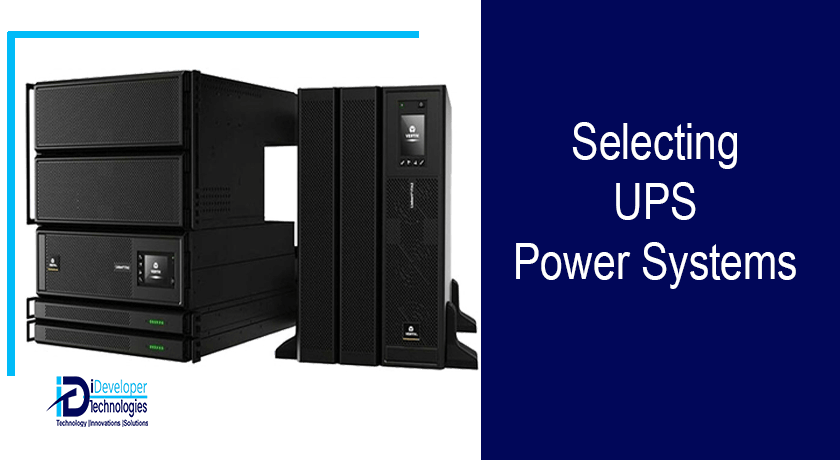
Choosing The Right UPS: Sizing, Runtime, And Redundancy
Power interruptions are among the top causes of IT downtime, equipment failure, and data corruption. Having the right UPS systems in Kenya, is a must have. Whether you manage a small server closet or operate a full-scale data center, reliable Uninterapted Power supplies, is your first line of defense against outages, voltage spikes, sags, and other power anomalies.
Yet selecting the right UPS systems in Kenya is far from simple. You must size it properly, determine adequate runtime, consider redundancy, and ensure compatibility with your equipment and power infrastructure. Additionally, ensure it’s an affordable UPS power backup in kenya.
This guide walks you step-by-step through the process of choosing the correct UPS system in Kenya, covering UPS types, capacity planning, battery needs, redundancy models, installation considerations, and long-term maintenance strategies and affordable UPS power backup in kenya.
Role of UPS
The major roles of UPS systems in Kenya, is to provides emergency power when utility power fails. Additionally, it also performs several other mission-critical functions, this including;
- Backup power during outages
- Line conditioning to smooth voltage fluctuations
- Surge protection against spikes
- Voltage regulation against sags and overvoltage
- Graceful shutdown automation for servers
- Protection for sensitive electronics (network gear, storage, firewalls, PBXs, IoT)
A UPS is not just a battery backup—it is the central protection layer of your onsite IT infrastructure.
Types of UPS Systems in Kenya for consideration
Getting affordable UPS power backup in kenya, is the goal of every organization. UPS suppliers in Kenya, deliver various brands.
Secondly, UPS units vary by how they handle power conditioning and switching between battery and main power.
a). Standby (Offline UPS)
- Basic protection
- Switches to battery when utility power fails
- Switch time: 2–10 ms
- Suitable for: desktops, small electronics, home labs
Not recommended for servers or mission-critical gear.
b). Line-Interactive UPS
- Moderate protection
- Uses automatic voltage regulation (AVR)
- Handles brownouts and minor sags more efficiently
- Switch time: 2–4 ms
- Suitable for SMB server rooms, networking closets, and edge locations
A common choice for small-to-medium server environments.
C). Double-Conversion (Online UPS)
- Best protection level
- Zero transfer time (always on inverter)
- Conditions power continuously
- Supports higher loads and unstable environments
- Suitable for: data centers, enterprise server rooms, hospitals, critical production environments
This is the recommended UPS type for mission-critical workloads.
Proper UPS Sizing — The Most Important Step
Incorrect UPS sizing results in:
- Systems shutting down too quickly
- Overloaded circuits
- Inability to add equipment in the future
- Wasted money on oversized systems
UPS sizing is based on VA (Volt-Amps) and Watts (W).
a). Understanding VA vs Watt Ratings
- Watt rating (W): Actual usable power
- VA rating: Volt-Amps, a measure of electrical load capacity
- Power factor (PF): W ÷ VA
Modern UPS systems often have PF = 0.9 or 1.0.
Example:
A 1500VA UPS with PF 0.9 → 1350W usable
A 3000VA UPS with PF 1.0 → 3000W usable
Always check both ratings before buying.
b). Step-by-Step UPS Sizing Method
Step 1 — List all equipment
Include:
- Servers
- Switches
- Storage units
- Firewalls
- Wireless controllers
- Modems/routers
- PoE loads
- KVMs
- Cooling systems (if supported)
Step 2 — Identify wattage for each device
Find wattage from:
- Manufacturer specs
- Power supplies
- Measurement tools (Kill-A-Watt, PDU metering, iLO/DRAC/IPMI)
Step 3 — Add up continuous power usage
Sum all wattage (W).
Step 4 — Apply overhead for growth
Add 20–30% headroom for future equipment.
Step 5 — Select a UPS that exceeds the total W load
Choose a UPS with at least:
Load × 1.2 = required UPS size
c). Practical UPS Sizing Example
You operate a small server rack with:
| Device | Wattage |
| 2 × Servers | 400W each |
| 1 × Switch | 100W |
| 1 × Firewall | 50W |
| 1 × NAS | 120W |
Total Load = 1070W
Add 30% headroom:
1070W × 1.3 = 1391W
Minimum UPS size:
1500W (approx. 1500–2000VA)
Determining Required UPS Runtime
Runtime determines how long equipment can stay online during an outage.
a). Typical Runtime Targets
- 5–10 minutes: Enough for graceful shutdown
- 20–30 minutes: Allow generator startup
- 1–4 hours: Critical continuous operation
- 8–24 hours: High availability facilities, telecom, hospital systems
Long runtimes require:
- Larger batteries
- External battery packs (EBPs)
- High-cost enterprise UPS models
b). Runtime is Load-Dependent
The more equipment connected = the faster the batteries drain.
Runtime curves look like:
- 25% load → Very long runtime
- 50% load → Behavior matches spec sheets
- 75–100% load → Runtime collapses quickly
Aim for 50–60% load on a UPS if extended runtime is important.
c). How to Estimate Runtime
UPS vendors provide runtime charts, but the formula is:
Higher load → shorter runtime
Lower load → longer runtime
For example:
A 3000VA (2700W usable) UPS:
- At 2000W load → ~5–8 minutes
- At 1000W load → ~20–30 minutes
- At 500W load → ~1+ hour
Always consult the manufacturer’s runtime charts.
Redundancy Options (N, N+1, 2N, 2(N+1))
Redundancy determines reliability.
a). No Redundancy (N)
- One UPS for the entire load
- Lowest cost
- Highest risk
Used in low-impact environments.
b). N+1 Redundancy
- One extra UPS module for failover
- Load is shared
- If one fails, system continues operating
- Common in small–medium data centers
This is the most cost-effective redundancy strategy.
c). 2N Redundancy
- Complete duplication of all UPS units and power paths
- Equipment has dual power supplies, each fed by different UPS
- Maximum resilience
Used in Tier III and Tier IV datacenters.
Comparing Redundancy Models
| Model | Description | Risk | Cost |
| N | One UPS | Moderate | Low |
| N+1 | UPS + 1 spare | Low | Medium |
| 2N | Fully mirrored UPS paths | Very low | High |
| 2(N+1) | Fully redundant with spares | Ultra low | Very high |
If your servers have dual PSUs, 2N is feasible.
If not, consider ATS switches for redundancy.
Battery Technology and Lifespan
UPS batteries can make or break runtime.
Types of UPS Batteries
VRLA (Sealed Lead-Acid)
- Most common
- Low cost
- 3–5 year lifespan
- Sensitive to temperature
Lithium-Ion
- Newer, more efficient
- 8–15 year lifespan
- Faster recharge
- Higher cost
- Lower weight
Lithium UPS systems are becoming standard for enterprise deployments.
Installation Considerations
A UPS systems in Kenya, are more than a box—you must integrate them properly. Key factors for consideration while setting up your UPS systems in Kenya include;
a). Electrical Requirements
- Input voltage compatibility (120V / 208V / 230V)
- Correct outlets or hardwire connections
- Circuit capacity
- PDU compatibility
Large UPS units may require:
- Dedicated breakers
- Electrician installation
- Building permits (for 480V systems)
b). Rack vs Tower UPS
Rack-Mount UPS
- Slim design
- Ideal for server racks
- Requires strong rails
- Better for centralized deployments
Read: Top 5 Rack Mount Server Machines in Kenya
Tower UPS
- For standalone equipment or small rooms
- Often lower cost
Many vendors offer convertible units.
c). Cooling & Environmental Requirements
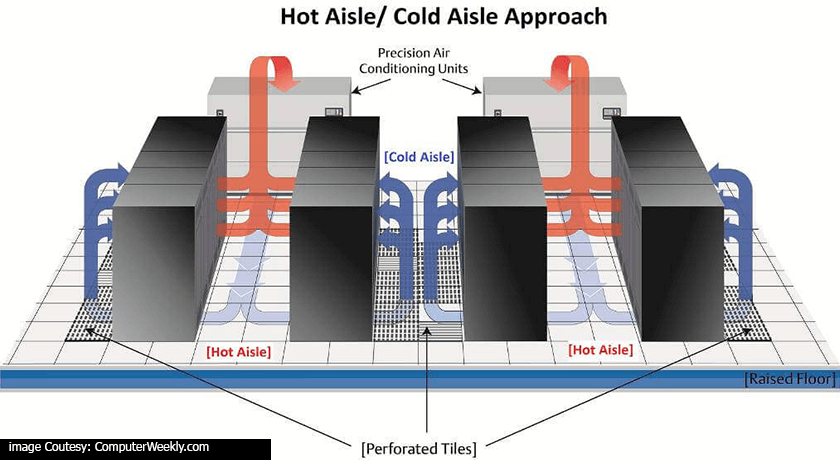
General UPS systems in Kenya, generate heat similar to all electronic devices. As a result, you need to;
Ensure:
- Adequate ventilation
- Not installed near HVAC intakes
- Room temperature 20–25°C (68–77°F)
Heat kills batteries quickly.
Monitoring, Management, and Automation
A UPS systems in Kenya, like any other equpment should be monitored.
a). SNMP & Network Monitoring
UPS devices can be monitored via:
- SNMP
- Web dashboards
- REST APIs
- Environmental sensors
You can track:
- Battery health
- Runtime remaining
- Load usage
- Temperature
- Event logs
b). Automated Shutdown
Servers can automatically shut down gracefully when:
- UPS switches to battery
- Runtime falls below threshold
Critical for preventing data loss.
c). Maintenance Scheduling
Having an affordable ups power backup in Kenya, is every orgnization goal. In this regard, top UPS systems in Kenya need Regular maintenance, which includes:
- Annual UPS testing
- Battery replacement every 3–5 years (VRLA)
- Thermal inspections
- Connection tightening
- Environmental checks
Choosing the Right Brand and Model
Major enterprise UPS vendors include:
- Vertiv / Liebert
- CyberPower (SMB environments)
- APC / Schneider Electric
- Eaton
Choose based on:
- Support availability
- Local parts supply
- Monitoring ecosystem
- Runtime options
- Warranty and SLA
Conclusion
Choosing the right UPS in Kenya, is not just about buying a battery backup—it’s about building a resilient power protection strategy. The correct UPS ensures:
- Continuous uptime
- Protection from surges and outages
- Data integrity
- Longer hardware life
- Operational continuity
As Leading UPS systems in Kenya supply, we believe that by understanding UPS sizing, runtime requirements, redundancy models, and long-term maintenance, you can design a power protection system that keeps your business running, even when the grid fails and additionally experience affordable UPS power backup in kenya.

Related Posts